What happened
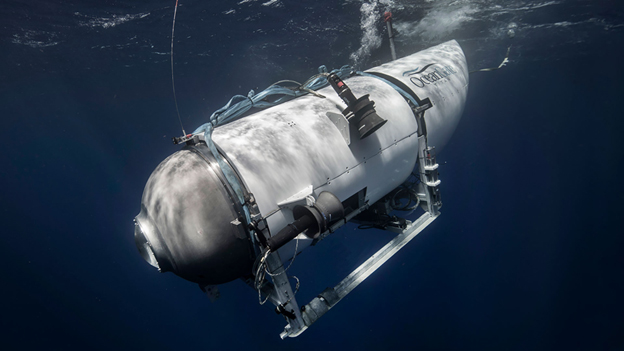
On 18 June 2023, OceanGate’s Titan submersible imploded during a dive to the Titanic wreck. All five people on board died. The NTSB’s 2025 investigation identified problems with the engineering process, testing, and interpretation of hull-monitoring data. [1]
The report says the hull likely suffered delamination after dive 80 and further damage of unknown origin after dive 82. It eventually buckled on dive 88. The testing had not established the hull’s actual strength and durability, and the monitoring analysis did not identify the need to take it out of service. These are findings made after the disaster; I do not assume everyone knew the full damage sequence beforehand. [1, pp. vi–vii, 66]
For me, the ethical issue is whether there was enough evidence to justify putting people inside that vessel. A previous successful dive might make a team feel more confident. It does not settle the question of how much damage a hull has accumulated or how long it can keep operating safely.
- Before the lossThe hull likely suffered delamination after dive 80, then further damage after dive 82.
- The hull buckled on dive 88. All five people on board died.
- The NTSB issued its investigation report.
Based on the NTSB’s later findings. The damage sequence was established retrospectively. [1, pp. vi–vii, 66]
How I apply the NSPE guide
I use the September 2021 NSPE Ethics Reference Guide as the main framework. I focus on four responsibilities below. These are my applications of the guide to the case, rather than NSPE findings against particular people. Open each note to see the clauses behind my reasoning.
1. Put people’s safety first
I think this is the clearest starting point. A schedule, a paying client, or confidence in a new design cannot be enough to resolve a serious safety concern. If the evidence is missing, I would want the dive paused while the team works out what is still unknown.
NSPE clauses: safety and loyalty
Canon I.1 puts public safety, health, and welfare first. Canon I.4 also recognises duties to employers and clients. The Study Guide’s hierarchy helps explain why loyalty cannot take priority over public safety. [2, pp. 3, 6]
2. Recognise when outside help is needed
A new pressure-hull design needs expertise that matches the problem. I would be cautious about a team relying only on its own confidence. Getting specialist review is a reasonable part of the work, especially where the design or evidence leaves difficult questions unanswered.
NSPE clauses: competence and consultation
Canon I.2 and II.2.a address working within areas of competence. Study Guide step 8 recommends consulting respected colleagues and outside professionals. I am applying those duties without making a claim about any individual’s credentials. [2, pp. 3, 6]
3. Be clear about what is known
I would expect a safety report to separate test results from assumptions. If the team cannot establish the hull’s remaining durability, that needs to be said plainly. Someone relying on the report should be able to see what the evidence supports and where it runs out.
NSPE clauses: truthful reporting
Canon I.3 and II.3.a require objective, truthful statements and relevant information in reports. III.3.a addresses material misrepresentations and omissions. [2, pp. 3–4]
4. Act when a safety concern is overruled
This is the duty I find hardest to put into practice. Raising a concern may put an engineer in conflict with the people paying them. Even so, I do not think an unresolved danger can simply be left in an email thread. The concern needs to be documented, taken to someone who can act, and followed through.
NSPE clauses: reporting and action
II.1.a calls for notifying the employer or client and an appropriate authority when overruled engineering judgment endangers life or property. II.1.f concerns reporting alleged Code violations. Step 9 asks the engineer to act on the judgment reached. [2, pp. 3, 6]
Three things the guide cannot do on its own
I find the guide useful because it gives me a way to organise the ethical problem. But applying it to Titan also shows where technical work and organisational support are needed.
It does not tell us exactly how to test a hull
“Safety first” gives a priority. It does not give a fatigue-life limit, inspection interval, or pressure-test acceptance criterion for this vessel. Engineers still have to establish a technical basis for the decision.
The Code already requires conformity with applicable engineering standards in II.1.b and III.2.b. My criticism is that a general ethics guide cannot supply all the technical detail. I would use steps 3 and 8 to identify what is unknown and bring in people qualified to resolve it. [2, pp. 3, 6]
It cannot make speaking up easy
A reporting duty is easier to write down than to carry out when someone fears losing their job. The guide does not provide a complete complaint process, a timetable for escalation, or a remedy if the person raising the concern is treated badly.
III.7 does prohibit malicious or false harm to another engineer’s reputation or employment. That matters, but it cannot by itself create a reporting system that people trust. I think organisations need a clear route for concerns and someone with the authority to respond. [2, pp. 3–6]
The NTSB records that David Lochridge reported defects in an earlier Titan hull in January 2018 and that his employment ended later that month. I find that sequence relevant when considering the difficulty of raising concerns. It does not, on its own, establish a legal finding of retaliation. The earlier hull also needs to be distinguished from the hull lost in 2023. [1, pp. 39–40]
It cannot independently verify a design
The NTSB reports that Titan was unclassed. Independent classification can bring design review, witnessed tests, and surveys. The investigation also identified insufficient voluntary guidance and regulation as contributing factors. [1, pp. 13–15, 66–67]
To me, this shows why an ethical commitment needs practical checks behind it. Requiring conformity with standards is useful, but someone still has to examine the evidence. Independent review does not remove every risk; it provides another opportunity to challenge assumptions before people depend on the design.

.jpg)

Where law fits into my analysis
I use the NSPE guide to discuss professional responsibility. I do not treat a safety investigation as a court judgment. Deciding civil or criminal liability would require the relevant law, jurisdiction, evidence, and legal process. The Study Guide also recommends checking relevant laws and getting legal advice where needed. [2, pp. 5–6]
My point here is narrower: I can question whether an engineering decision was ethically justified without pretending that I have established a legal verdict.
What would you do?
- 3Establish the factsWhat do we know about the hull? What is still uncertain?
- 8Get outside adviceAsk qualified people to challenge the evidence and assumptions.
- 9Act on the judgmentWithhold approval while a serious safety concern remains unresolved.
My application of NSPE Study Guide steps 3, 8 and 9. [2, p. 6]
A hypothetical situation for discussion
You are asked to approve a passenger dive. The team cannot establish the hull’s remaining durability. The client says, “It worked last time.” What would you do first?
Based on Canon I.1 and Study Guide steps 3, 8 and 9. This is an invented scenario, not a record of a conversation at OceanGate. [2]
My conclusion
I would pause the dive in that situation. I would want the team to establish the facts, get independent advice, and explain what evidence would justify going ahead. I would not be comfortable approving it simply because it had worked before.
That is what I take from the NSPE Study Guide’s steps 3, 8 and 9: find out what is known, consult people who can help, and act on the resulting judgment. The hard part is following that process when it delays the work or brings disagreement. [2, p. 6]
McGinn’s discussion of the Fundamental Ethical Responsibilities of Engineers gives me a useful comparison: harm, unreasonable risk, informing people at risk, and legitimate employer or client interests all matter here. I keep NSPE as my main framework, while using FERE to think about the same responsibilities from another angle. [3, chapter 3]
For me, the lesson from Titan is that an engineer needs a sound reason to approve work that puts people at risk. If I could not explain that reason using evidence, I would need to say so and withhold approval until the concern was resolved.
References
NSPE page numbers below refer to the printed September 2021 edition. The case account uses the NTSB report dated 2 October 2025.
- National Transportation Safety Board. (2025). Hull Failure and Implosion of Submersible Titan. MIR-25-36. Read the investigation.
- National Society of Professional Engineers. (2021). NSPE Ethics Reference Guide. September edition. Code, pp. 3–4; Study Guide, pp. 5–6. NSPE reference guide.
- McGinn, R. (2018). The Ethical Engineer: Contemporary Concepts and Cases. Princeton University Press. Chapter 3. Publisher.